On November 18, 2025, the School of Mechanical Engineering of Southeast University (SEU) and the SEU Nanjing Alumni Association held an exchange symposium at the SEU Alumni Innovation Institute. The two sides conducted in depth discussions on core topics such as talent cultivation, research collaboration, and technology transfer, jointly drawing a new blueprint for industry academia research collaborative development. Attendees from the School of Mechanical Engineering included Wang Jun (Party Secretary), Fei Qingguo (Dean), Liu Xiaojun (Associate Dean), Hu Tao (Dean Assistant), and Yan Yan (Alumni Affairs Secretary). Attendees from the SEU Nanjing Alumni Association included Zhu Wenjun (Executive Vice President), He Pingping and Sun Xiaofen (Executive Secretaries), and Jiang Xiaofang (Director of the Technology Transfer Department).
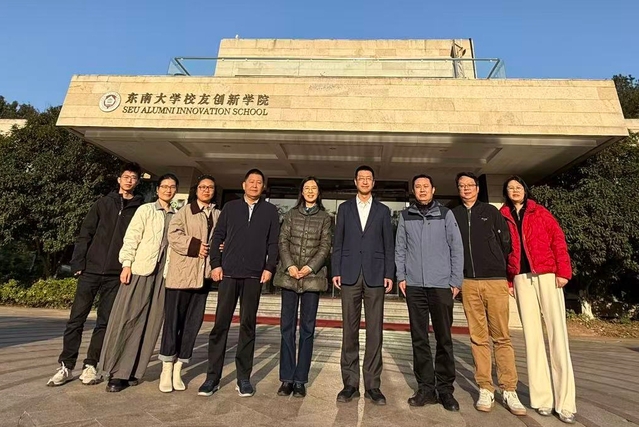
After touring the Alumni Innovation Institute and taking a group photo, Executive Vice President Zhu Wenjun first presented the notable achievements the Nanjing Alumni Association has made in building a science and innovation network and promoting cooperation between alumni and local governments. The association has established science and innovation networks in China, Hong Kong, the United States, and the United Kingdom. By coordinating local governments (especially high tech zones), alumni associations, universities, and financial services, it has built a quality platform to serve and empower early stage science and technology projects, accompanying them as they grow. The alumni association is also actively promoting the alumni driven economy.
Associate Dean Liu Xiaojun then gave a presentation entitled “The School’s 14th Five Year Plan Summary and 15th Five Year Plan Outlook.” He reviewed the School’s achievements during the 14th Five Year Plan period in four areas: discipline development, faculty strength, scientific research, and talent cultivation, noting that the School has kept close to industry needs and achieved continuous breakthroughs and innovation. During the 15th Five Year Plan period, the School will strive to raise the rate of undergraduates pursuing further studies, cultivate a high quality faculty, target national strategic needs in major equipment, and seek breakthroughs in frontier areas such as machine tools, atomic scale manufacturing, and deep sea/deep space exploration. The goal is to become “among the top domestic first class disciplines and among the world’s first class disciplines.”
During the exchange and discussion session, the two sides engaged in lively debate on two main topics: “full chain cooperation between the School’s research achievements and the business collaborations of alumni enterprises” and “a dual drive plan linking the School’s talent cultivation with the talent needs of alumni enterprises.” Regarding the joint construction of an industry academia research collaborative innovation platform, President Zhu emphasized the necessity of deeply binding SEU alumni with the alumni economy. He proposed linking alumni enterprises and financial institutions to provide investment support for projects at the early stage of technology transfer, addressing weaknesses and accelerating incubation and transformation guidance. The recently launched alumni enterprise intelligent agent system can accurately map the supply chains and technology needs of enterprises while actively seeking government resources.
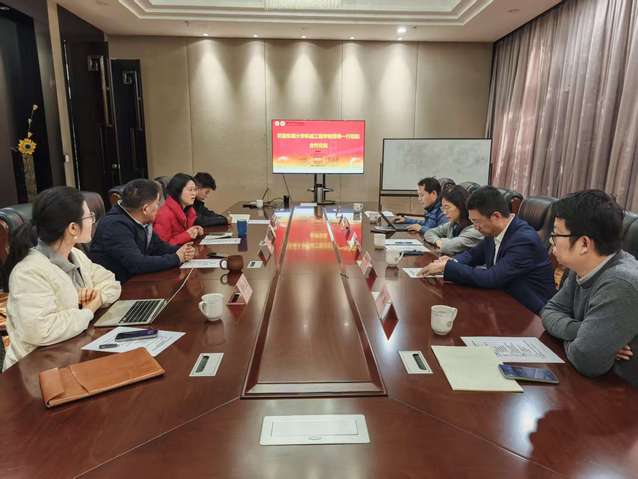
Dean Fei Qingguo noted that the School of Mechanical Engineering has unique advantages in solving the technical difficulties and pain points of enterprises. If the horizontal service capability of research can be elevated to the level of influencing the enterprise ecosystem through the alumni association platform, both sides will benefit. He stressed the need to fully leverage the alumni association’s three “windows”: serving major industrial needs, reaching out to global alumni, and reaching out to society at large. It is essential to open up information sharing channels between the School and the alumni association and to optimise the top level design mechanism. The two sides must accurately identify the pain points in current technology transfer, provide focused coaching, achieve rapid breakthroughs, and ultimately reach industrial mass production, thereby creating an advanced manufacturing economic sector strongly driven by engineering disciplines.
Party Secretary Wang Jun emphasised that efforts should be made to fully tap the School’s research strength in intelligent manufacturing, focusing on industrial sectors such as smart equipment and industrial internet. The School will gather forces from across the industrial ecosystem, especially SEU alumni enterprises, and jointly carry out industry academia research cooperation to advance the School’s technology transfer. At the same time, regular and standardised procedures should be established and strictly followed. The School will also assist the Nanjing Alumni Association in recommending and screening alumni and teacher related self media content. Under the guidance of the Nanjing Alumni Association, the School will continue to advance the establishment, subsequent development, and activities of the Mechanical Branch (of the Alumni Association).
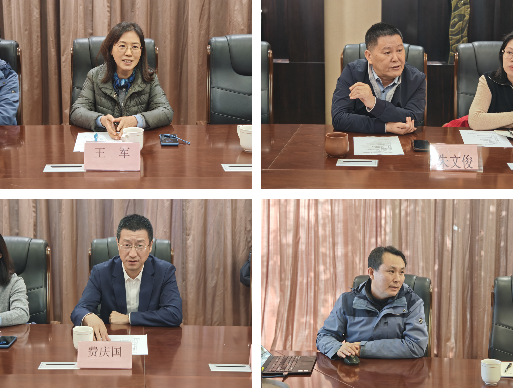
President Zhu Wenjun stated that the Nanjing Alumni Association will fully play its bridging role, integrate alumni resources, and do its utmost to support the implementation of the School’s research projects and joint talent cultivation, thereby building a win win ecosystem of “School – Alumni – Enterprise.”
This symposium marks a new stage in the cooperation between the School of Mechanical Engineering of Southeast University and the SEU Nanjing Alumni Association. In the future, the two sides will work together to create a deeply integrated, sustainably developing model of industry academia research collaboration through joint construction of collaborative innovation platforms, promotion of two way talent flows, and joint efforts in key technology research. This will inject continuous new momentum into the development of the alma mater and the innovation of its alumni, jointly writing a glorious chapter of industry academia research collaborative innovation.
Text & Images: Yan Yan
Reviewers: Wang Jun, Liu Xiaojun

